

We’re All Tired of Optimizing Everything
Maybe your life does not need another dashboard
WEEKLY BLOG 7/27/26 – 7/31/26

I checked my watch this morning to find out whether I slept well.
Think about that for a second.
I was there. I experienced the entire night. But apparently, I still needed a device to tell me whether it counted as good sleep.
That is modern life.
We track our steps. Our heart rate. Our calories. Our screen time. Our productivity. Our investment returns. Our net worth. Our children’s activities. Our career progress.
There is a score for everything.
And if there is not a score yet, someone is probably building an app for it.
At first, all of this information feels useful. Data gives us a sense of control. It helps us notice patterns, make adjustments, and understand whether we are moving in the right direction.
But at some point, optimization stops feeling like control.
It starts feeling like another job.
When Everything Becomes a Competition
A lot of younger professionals are quietly pushing back on the idea that every part of life needs to be maximized.
They still want to make progress. They still want financial stability, meaningful work, and a better future.
But many are less interested in chasing growth at any cost.
They have watched what constant optimization can do.
More responsibility. More meetings. More income. More pressure. More things to maintain.
The numbers may improve while life feels worse.
That is an uncomfortable idea because most of us have been taught to assume that more is the goal.
More income.
More assets.
More productivity.
More achievement.
But more is not always better if it comes with less time, less flexibility, and less peace of mind.
Money Gets Pulled Into the Same Trap
Financial planning can easily become another optimization exercise.
Should you invest every available dollar?
Should you carry a low-interest mortgage because the expected market return may be higher?
Should you keep the smallest possible amount in cash?
Should you take the promotion because the salary is better?
Should you delay the vacation because investing the money could produce more wealth later?
There is often a mathematically efficient answer.
That does not mean it is the right answer for your life.
Paying down debt may not maximize your projected net worth, but it may help you sleep better.
Keeping more cash than a financial model technically requires may create a level of security that allows you to take a career risk.
Taking a lower-paying job may slow your savings rate, but give you more control over your time.
Spending money on a family trip while your children are young may not be the most efficient use of capital.
It may still be one of the best uses of your money.
Inefficient Does Not Mean Irresponsible
There is a difference between being financially careless and choosing not to optimize every dollar.
That difference matters.
Buying things you cannot afford to impress people you do not know is not the same as intentionally spending on something your family values.
Ignoring debt is not the same as choosing to pay it down faster because the emotional benefit matters to you.
Holding cash with no plan is not the same as maintaining a larger reserve because your income is unpredictable or you are preparing for a major change.
Personal finance is personal.
That phrase gets repeated so often that it can lose its meaning. But this is what it actually means.
Two people can face the same decision, look at the same numbers, and reasonably choose different paths.
One person may want to maximize long-term wealth.
Another may value flexibility.
Another may want to reduce anxiety.
Another may want to create time with family before that season of life passes.
None of those goals automatically shows up on a performance dashboard.
They still matter.
The Plan Has to Fit the Person
A real financial plan should reflect more than a projected ending balance.
It should reflect the life happening between now and then.
Your career.
Your family.
Your health.
Your responsibilities.
Your fears.
Your definition of enough.
This is where planning becomes different from calculation.
A calculator can tell you which option may produce the highest expected result.
It cannot tell you which tradeoff you will be glad you made ten years from now.
That requires context.
It requires understanding how your taxes, cash flow, investments, debt, family needs, and personal priorities fit together. Looking at only one piece can make a decision appear perfect on paper while creating stress everywhere else.
A well-coordinated plan looks beyond whether a decision is technically efficient. It asks whether it supports the life you are actually trying to build.
That is the part no dashboard can measure for you.
Final Thought
We do not need to stop measuring everything.
Information can be helpful. Progress matters. Numbers can keep us honest.
But the numbers are supposed to serve the goal.
They are not the goal.
You are allowed to make a decision that is not perfectly optimized.
You are allowed to choose peace of mind.
You are allowed to value time.
You are allowed to spend money on something that matters now, even if a spreadsheet says waiting would be more efficient.
That is not failing at financial planning.
In many cases, that is the entire point of it.
The purpose of a financial plan is not to turn life into a spreadsheet. It is to make the spreadsheet support the life.
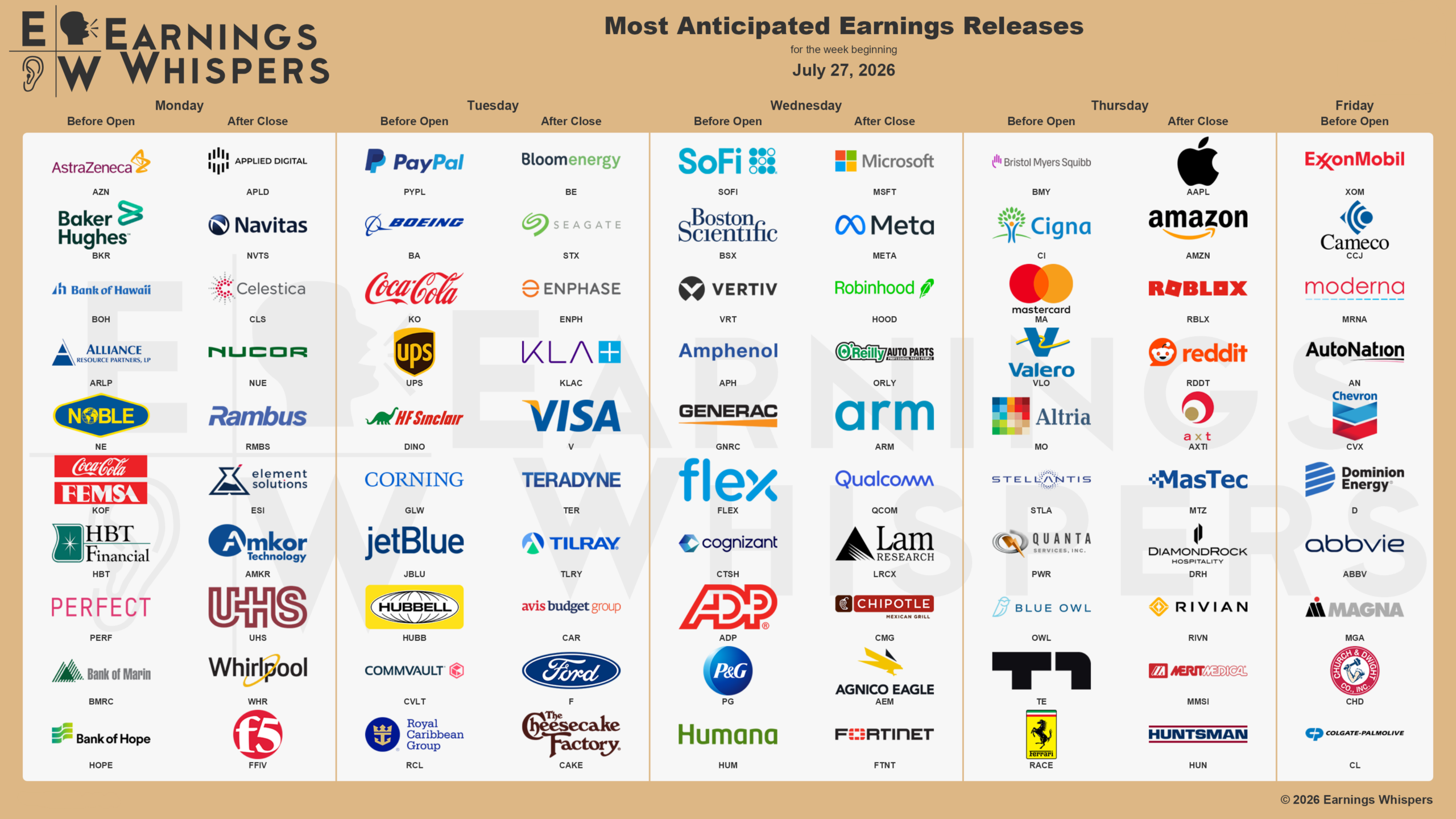
Stock Market Calendar This Week:
|

About Amit: I am a first generation American, the son of a working-class Indian family, and I lived through my parents’ struggle to find their place in this country, to put down roots that would sustain them as well as their children in a new land. As they encouraged me to excel in school and fostered my hobbies and interests, I was keenly aware of the dynamic between them. I understood that there was a difference between where they came from individually and where we were now. They worked hard in their individual capacities, but they weren’t always on the same page about financial issues – and that can make or break a family’s future. I didn’t know it at the time, but this laid the groundwork for my passion towards financial services and helping families succeed.
IMPORTANT NOTICE AND DISCLOSURE
The information and material contained in this communication is confidential and intended for the recipient addressee named. If you are not the intended recipient please delete the message and notify the sender immediately.
NewEdge Advisors, LLC is an Investment Adviser registered with the Securities and Exchange Commission. Any information provided has been obtained from sources considered reliable, but we do not guarantee the accuracy or the completeness of any description of securities, markets or developmentsmentioned. As a precautionary measure, we cannot rely on e-mail requests to authorize, direct or effect the purchase or sale of any security, wire transfer, or to affect any other transactions. Such requests, orders, or other instructions sent by email should be confirmed verbally, prior to their anticipated execution. We are unable to ensure email sent to you from us, or sent from you to us will be received. Please contact us at 845-652-3449 if there is any change in your financial situation, needs, goals or objectives, or if you wish to initiate any restrictions on the management of the account or modify existing restrictions. Additionally, we recommend you compare any account reports from NewEdge Advisors LLC with the account statements from your Custodian. Please notify us if you do not receive statements from your Custodian on at least a quarterly basis. Our current disclosure brochure, Form ADV Part 2, is available for your review upon request. This disclosure brochure, or a summary of material changes made, is also provided to our clients on an annual basis. This material was prepared with the assistance of AI. All content has been reviewed, edited, and approved by Forefront Wealth Planning prior to use. This is general education and not a substitute for personalized tax, legal, or investment advice. Your situation should be reviewed with the appropriate professionals before taking action. Advisory services offered through NewEdge Advisors, LLC, a registered investment adviser.