


Everyone Was on the Same Side of the Boat
What last week’s market whiplash says about crowds, rates, and where you stand
WEEKLY BLOG 11/15/26 – 11/21/26
Four Days in November
Anyone who has been on a small boat knows the rule. When everyone rushes to one side to look at something, the boat tips. The water didn’t change. The weight did.
On November 5, stocks sold off hard. Traders piled into bets that the market would keep falling. According to Goldman Sachs data cited by the research firm Macro Charts, bearish bets in S&P 500 futures jumped by roughly $19 billion that day alone.
Then came Monday, November 9. The S&P 500 rose 2.35%, its best day since April, according to CNBC. Ten of eleven sectors finished green. About 84% of the stocks in the index closed higher.
The headlines gave the usual reasons. Oil fell. Tech had been beaten up and bargain hunters stepped in. Both true. But there was a quieter story underneath.
Inflation was still running hot. The Fed was still leaning toward another hike. What changed was the weight in the boat. Roughly $17 billion of those bearish bets were closed out within days, and closing a bet against the market means buying. A big chunk of that rally was the crowd running back to the other side.
What Positioning Really Means
“The early bird gets the worm. The second mouse gets the cheese.”
Wall Street has a word for how heavily people are already leaning one way. Positioning.
Think about the toilet paper aisle in March 2020. Nobody suddenly needed more toilet paper. Everyone bought it at the same time because they were afraid everyone else would. Shelves emptied in a day. A few weeks later the panic buyers had a closet full and stopped buying. Prices and shelves went back to normal. The need never changed. The crowd did.
Markets work the same way. When almost everyone has already bet on a decline, there aren’t many sellers left. The selling is done. So even mildly good news forces the people who bet against the market to buy back in. That buying pushes prices up, which forces more of them to buy. A rally feeds on itself for a few days.
It works in reverse too. When everyone is already all in and feeling great, there aren’t many buyers left. A small disappointment can knock things down hard.
Here’s the part most people miss. Positioning tells you about the crowd. It tells you very little about the economy. A big up day driven by bears buying back is not proof that the outlook improved. A big down day driven by forced selling is not proof that it got worse. Both are mostly about who was standing where in the boat.
The Best Days Hide Next to the Worst Ones
“If at first you don’t succeed, skydiving is not for you.”
This isn’t a one-week quirk. It’s one of the most consistent patterns in market history.
J.P. Morgan Asset Management tracks it every year. Over the 20 years through 2024, seven of the market’s ten best days came within two weeks of the ten worst days, as CNBC reported. Someone who put $10,000 in the S&P 500 in 2005 and stayed put had about $71,750 by the end of 2024. Miss just the ten best days and that drops to about $32,871.
Ten days. Out of roughly 5,000.
The Cost of Missing the Market’s Best Days
|
$10,000 in the S&P 500, 2005 to 2024 |
Ending value |
Annual return |
|
Stayed fully invested |
$71,750 |
10.4% |
|
Missed the 10 best days |
$32,871 |
6.1% |
|
Missed the 20 best days |
$19,724 |
3.5% |
|
Missed the 30 best days |
$12,948 |
1.3% |
|
Missed the 60 best days |
$4,712 |
-3.7% |
Source: J.P. Morgan Asset Management analysis of a hypothetical $10,000 investment in the S&P 500 from Jan. 3, 2005 to Dec. 31, 2024, as reported by CNBC. For illustration only. Indexes cannot be invested in directly, and past performance does not guarantee future results.
The best days cluster near the worst ones for exactly the reason above. Fear builds, bets pile up on one side, and then the snapback comes fast. So the person who sells on the scary day is usually on the sidelines for the relief day. Last week was a small, live example of a very old pattern.
Morningstar measures the real-world cost of this. Its latest Mind the Gap study found the average dollar in US mutual funds and ETFs earned 8.7% a year over the decade ending 2025. The funds themselves earned 9.9%. That 1.2-point gap came from the timing of buying and selling. In other words, investors lost about an eighth of their returns by moving around.
And the gap grows when things get bumpy. Morningstar found the most volatile funds had a gap of about 2.1 points a year, against 0.4 for the calmest ones, according to Advisor Perspectives. The investments didn’t do worse. The investors did.
The Bigger Crowd Is in the Bond Market
“I’m on a seafood diet. I see food and I eat it.”
The stock market’s crowd gets the headlines. The more important crowd right now is in interest rates.
Not long ago, the consensus bet was simple. Inflation was beaten and rate cuts were coming. The Fed even delivered a few cuts late last year. That boat has now tipped the other way.
The October inflation report came in hot again. Prices rose 0.4% for the month and core prices rose 0.3%, both above forecasts, according to CNBC. That’s the third straight 0.3% reading on core. Traders now fully expect a quarter-point hike when the Fed meets December 8 and 9. Fed Governor Christopher Waller even said a half-point move should be considered.
The two-year Treasury yield, which tracks where people think the Fed is headed, ended the week of November 9 near 4.9%. Markets are now pricing in hikes stretching into 2027. One analyst I read put it well. Hikes get priced in fast and priced out slowly.
This matters for a lot of families in a practical way. Cash and short-term Treasuries are paying more than they have in a long time. For New Jersey residents, Treasury interest is also exempt from state income tax. For anyone holding a cushion of cash for a home project, a college bill, or the years between leaving work and tapping retirement accounts, that’s real money.
There’s a second effect that gets less attention. Stocks and long-term bonds have recently started moving in the same direction. For years the deal was that bonds rose when stocks fell. When inflation is the main worry, both can fall together. A portfolio built on just stocks and bonds may not have the shock absorber people assume it has.
Where You Stand in the Boat
“A plan is just a list of things that won’t happen exactly that way.”
You can’t control where the crowd stands. You can control where you stand.
Most of the damage investors do to themselves happens on days like November 5. The news is loud, the screen is red, and doing something feels responsible. Usually it isn’t. The investor who sold that Thursday likely missed the Monday that followed.
The fix isn’t more willpower. It’s building the plan so you don’t need willpower. That means knowing which money has a job in the next few years and keeping it somewhere boring. It means knowing which money has a job in fifteen years and letting it ride out the noise. When each dollar knows its job, a scary Thursday is just a Thursday.
This is why I keep saying the plan is the product, not the portfolio. A good plan decides in advance what you’ll do when the boat rocks. Higher rates, a crowded trade, a hot inflation print. None of it requires a new decision if the old decision was a good one.
Year end is a natural time to check that. If you’re not sure which of your dollars are meant for the next few years and which are meant for the long haul, that’s worth sorting out before January. It’s the kind of conversation we have with clients every week, and it usually takes less time than people expect.
Where I Could Be Wrong
Positioning explains a lot of short-term moves. It doesn’t explain everything. Oil really did fall, and that really does help the inflation picture. Some of last week’s buying was genuine.
The crowd isn’t always wrong either. Sometimes the people betting on a decline are early, not wrong. The smart folks I read disagree right now. One sees one of the best buying setups of the year. Another sees reasons for caution heading into year end. I don’t know who’s right, and I’m suspicious of anyone who says they do.
The rate story could also reverse. A weak retail sales report could pull short-term yields back down quickly. That’s the point of this whole post. Nobody knows which way the boat tips next, which is exactly why your plan shouldn’t depend on guessing.
Sources
CNBC via NBC Boston, J.P. Morgan best and worst days data
Advisor Perspectives, investor return gap and volatility
Did you miss our last blog?
The Week That Felt Worse Than It Was
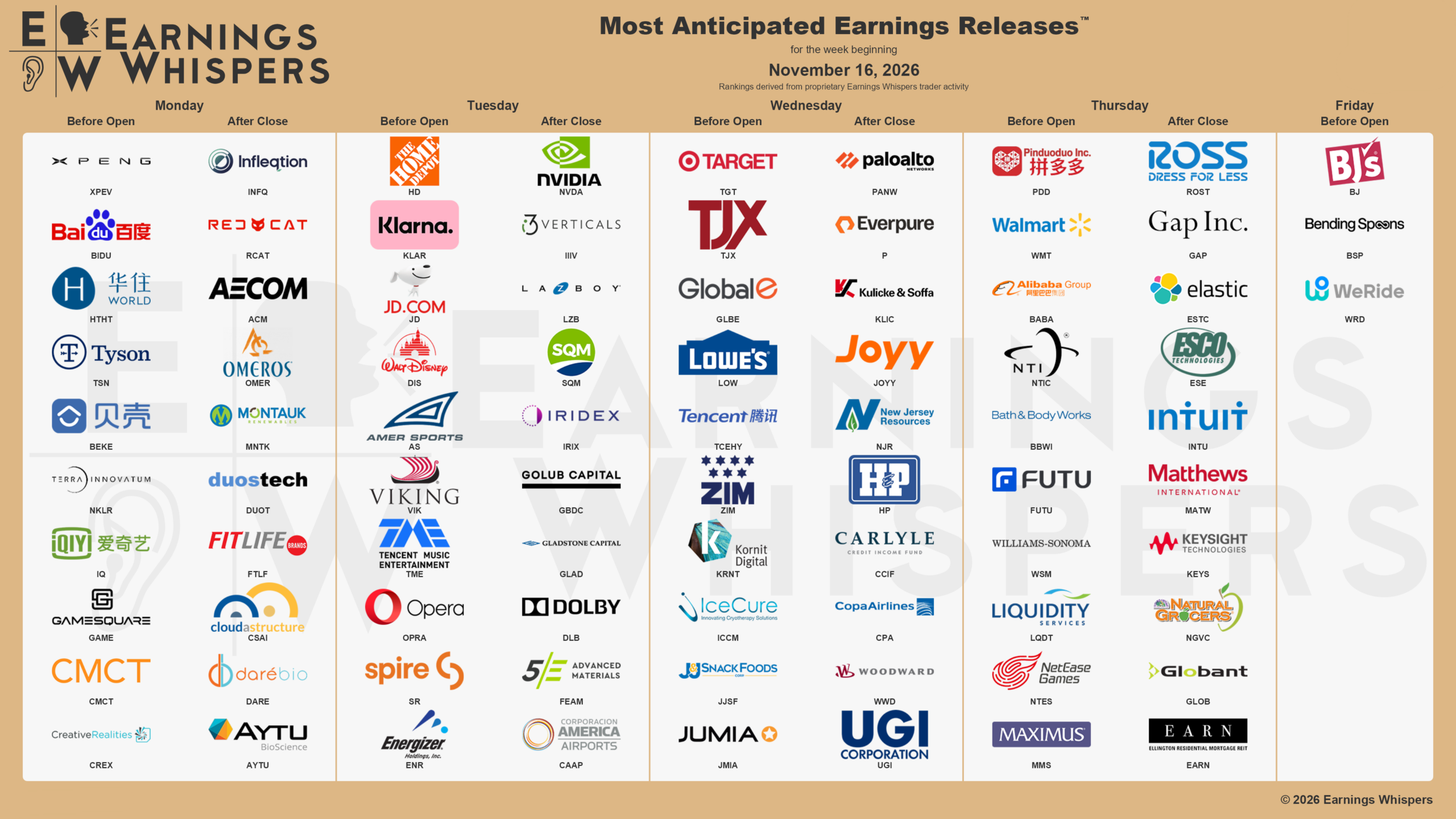
Stock Market Calendar This Week:
| Monday, Nov. 16 | |
| 8:30 AM | Empire State Manufacturing Survey |
| 12:00 PM | Fed speech: Fed Chairman Kevin Warsh speaks |
| 5:00 PM | Federal Reserve Bank of Richmond President Thomas Barkin speaks at CFA North Carolina event |
| Tuesday, Nov. 17 | |
| 7:30 AM | Fed speech: St. Lous Fed President Alberto Musalem |
| 8:30 AM | Retail Sales |
| 8:30 AM | Import Prices |
| 9:10 AM | Fed speech: Fed governor Christopher Waller |
| 9:15 AM | Industrial Production, M/M% |
| 9:15 AM | Capacity Utilization % |
| 9:30 AM | FRB Cleveland President Beth Hammack speaks at Brookings Institution |
| 10:00 AM | Manufacturing & Trade: Inventories |
| 10:00 AM | NAHB Housing Market Index |
| 2:25 PM | Fed speech: New York Fed President John Williams |
| TBA | Cleveland Fed Conversations on Central Banking |
| Wednesday, Nov. 18 | |
| 8:30 AM | Housing Starts |
| 10:00 AM | Pending Home Sales Idx, M/M% |
| 1:35 PM | Fed speech: Fed governor Michael Barr |
| 2:00 PM | Federal Open Market Committee meeting minutes published |
| 2:30 PM | Fed speech: New York Fed President John Williams |
| 4:15 PM | Fed speech: Minneapolis Fed President Neel Kashkari |
| Thursday, Nov. 19 | |
| 8:30 AM | Philadelphia Fed Business Outlook Survey |
| 8:30 AM | Weekly Jobless Claims |
| 10:00 AM | Leading Indicators |
| 11:00 AM | Kansas City Fed Survey |
| 12:30 PM | FRB Chicago President Austan Goolsbee participates in Economic Club of Indiana moderated discussion |
| 2:15 PM | Fed speech: Fed governor Michael Barr |
| 5:30 PM | Money Marketeers dinner event with Federal Reserve Bank of Philadelphia President Anna Paulson |
| Friday, Nov. 20 | |
| 8:25 AM | Fed speech: Fed governor Christopher Waller speech |
| 10:00 AM | U. Michigan Final Consumer Survey |
| 12:15 PM | Fed speech: Fed governor Lisa Cook |
| TBA | Federal Reserve Governor Christopher Waller speaks at National College Fed Challenge finals |

About Amit: I am a first generation American, the son of a working-class Indian family, and I lived through my parents’ struggle to find their place in this country, to put down roots that would sustain them as well as their children in a new land. As they encouraged me to excel in school and fostered my hobbies and interests, I was keenly aware of the dynamic between them. I understood that there was a difference between where they came from individually and where we were now. They worked hard in their individual capacities, but they weren’t always on the same page about financial issues – and that can make or break a family’s future. I didn’t know it at the time, but this laid the groundwork for my passion towards financial services and helping families succeed.
IMPORTANT NOTICE AND DISCLOSURE
The information and material contained in this communication is confidential and intended for the recipient addressee named. If you are not the intended recipient please delete the message and notify the sender immediately.
NewEdge Advisors, LLC is an Investment Adviser registered with the Securities and Exchange Commission. Any information provided has been obtained from sources considered reliable, but we do not guarantee the accuracy or the completeness of any description of securities, markets or developmentsmentioned. As a precautionary measure, we cannot rely on e-mail requests to authorize, direct or effect the purchase or sale of any security, wire transfer, or to affect any other transactions. Such requests, orders, or other instructions sent by email should be confirmed verbally, prior to their anticipated execution. We are unable to ensure email sent to you from us, or sent from you to us will be received. Please contact us at 845-652-3449 if there is any change in your financial situation, needs, goals or objectives, or if you wish to initiate any restrictions on the management of the account or modify existing restrictions. Additionally, we recommend you compare any account reports from NewEdge Advisors LLC with the account statements from your Custodian. Please notify us if you do not receive statements from your Custodian on at least a quarterly basis. Our current disclosure brochure, Form ADV Part 2, is available for your review upon request. This disclosure brochure, or a summary of material changes made, is also provided to our clients on an annual basis. This material was prepared with the assistance of AI. All content has been reviewed, edited, and approved by Forefront Wealth Planning prior to use. This is general education and not a substitute for personalized tax, legal, or investment advice. Your situation should be reviewed with the appropriate professionals before taking action. Advisory services offered through NewEdge Advisors, LLC, a registered investment adviser.