

A Good Investment Year Can Still Create a Bad Tax Surprise
Why portfolio returns and after-tax results are not the same thing
WEEKLY BLOG 08/10/26 – 08/14/26
A rising portfolio feels like good news.
Your investments are worth more. The strategy appears to be working. The statement looks better than it did at the beginning of the year.
Then the tax forms arrive.
Suddenly, the investment return and the amount you actually keep look like two very different numbers.
This does not mean gains are bad. Making money and paying some tax is generally better than not making money at all.
But it does mean a good investment year can create a tax surprise if nobody is looking at the full picture before December.
The Gain You See Is Not Always the Gain You Owe Tax On
An investment can rise significantly without creating an immediate taxable event.
If you bought a stock for $50,000 and it is now worth $75,000, you have an unrealized gain of $25,000. The value has increased, but the gain generally has not been realized because the investment has not been sold.
Once you sell, the tax conversation changes.
|
Before Selling |
After Selling |
|
|
Original cost basis |
$50,000 |
$50,000 |
|
Current market value |
$75,000 |
$75,000 |
|
Gain status |
Unrealized (on paper) |
Realized (taxable) |
|
Taxable event? |
No |
Yes, $25,000 gain |
Source: Hypothetical example for illustrative purposes only. Actual tax treatment depends on individual circumstances.
The difference between the sale price and your cost basis, which is generally what you paid for the investment after certain adjustments, determines the gain or loss. Investments held for more than one year are generally treated as long-term holdings. Investments held for one year or less are generally treated as short-term holdings.
The timing matters.
So does everything else happening in your financial life.
Selling an investment may make perfect sense because the position has become too large, the original reason for owning it has changed, or the money is needed for another goal.
The mistake is not selling.
The mistake is looking at the investment decision without looking at the tax impact until months later.
Mutual Funds Can Create Gains You Did Not Choose
Here is one of the more frustrating surprises.
You do not always need to sell an investment yourself to receive a taxable capital gain distribution.
A mutual fund may sell investments inside the fund and distribute its realized gains to shareholders. Those capital gain distributions are generally considered income to the shareholder, even when the distribution is credited to the account rather than taken as cash.
In other words, you may receive a tax bill for activity that happened inside the fund.
You may even owe tax on a distribution that was automatically reinvested.
That does not make mutual funds bad investments. It means the structure of the investment matters, especially in a taxable account.
A portfolio can be well diversified and still be tax-inefficient.
Losses Can Help, but They Are Not Free Money
Most investors would prefer every holding to go up.
Real portfolios do not work that way.
At almost any point, some investments may be trading below their original purchase price. Selling one of those positions can create a realized capital loss. Capital losses can generally offset capital gains, and excess net capital losses may offset a limited amount of ordinary income, with remaining losses potentially carried forward.
That is the basic idea behind tax-loss harvesting.
But the tax benefit should not become the only reason for making the trade.
You still need to consider whether you want exposure to that investment, what might replace it, how the sale affects the portfolio, and whether transaction costs or other consequences apply.
You also need to be careful about the wash-sale rule. A loss can be disallowed if substantially identical securities are purchased within 30 days before or after the sale.
The goal is not to manufacture losses.
The goal is to make thoughtful investment decisions while understanding how gains and losses interact.
Charitable Giving Can Be Part of the Conversation
Investors who are already planning to give to charity may also want to review what they intend to give.
Writing a check is simple.
But appreciated investments may offer another option.
Donations of property to qualified charitable organizations are subject to specific rules involving fair market value, holding periods, deduction limits, and documentation. Depending on the situation, comparing a direct gift of appreciated securities with selling the investment and donating cash may reveal a meaningful difference.
The important part is that this decision needs to happen before the investment is sold.
Once the gain has been realized, some planning opportunities may already be gone.
Do Not Wait for the Tax Form
The tax form records what already happened.
Planning happens before the trade.
Before year-end, it may be helpful to review:
- Realized gains and losses so far
- Large unrealized gains in taxable accounts
- Positions that have become too concentrated
- Mutual funds that may make capital gain distributions
- Charitable gifts planned for the rest of the year
- Loss carryforwards from previous years
- Major purchases or cash needs that could require selling investments
None of these items should be viewed alone.
A concentrated position may create risk, even if selling creates a tax bill. A loss may provide a tax benefit, but replacing a good investment with a poor one does not improve the plan. A charitable gift may be valuable, but only if it supports something you already intended to do.
The tax result matters.
It just does not get to make every decision.
Final Thought
A good investment year is a good problem to have.
But it is still something that needs to be managed.
Portfolio value, investment return, and after-tax return are not always the same thing. The difference often comes down to decisions made before the calendar reaches December.
The goal is not to avoid every tax. The goal is to avoid unnecessary surprises.
And make sure investment decisions support the rest of your financial plan.
Because once the tax form arrives, it is usually too late to change the decisions that created it.
Sources
Internal Revenue Service, Topic No. 409, Capital Gains and Losses. https://www.irs.gov/taxtopics/tc409
Internal Revenue Service, Mutual Fund Capital Gain Distributions. https://www.irs.gov/taxtopics/tc404
Internal Revenue Service, Instructions for Schedule D, including wash-sale rules. https://www.irs.gov/instructions/i1040sd
Internal Revenue Service, Topic No. 506 and Publication 526, Charitable Contributions. https://www.irs.gov/publications/p526
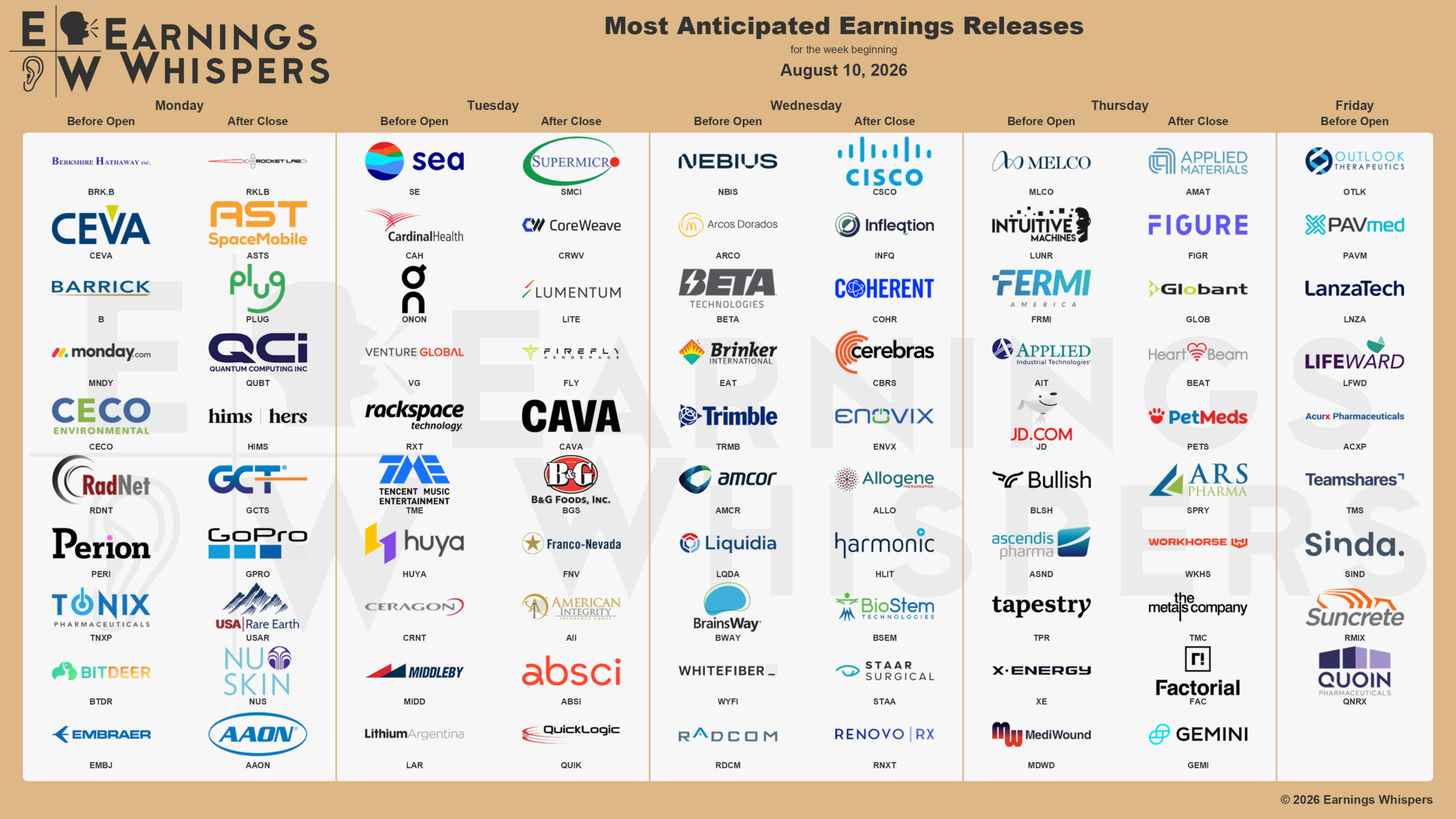
Stock Market Calendar This Week:
| Time (ET) | Report |
| Monday, Aug. 10 | |
| No events scheduled | |
| Tuesday, Aug. 11 | |
| 6:00 AM | NFIB Index of Small Business Optimism |
| 10:00 AM | Existing Home Sales |
| 11:00 AM | Federal Reserve Bank of New York Q2 Household Debt and Credit Report published |
| Wednesday, Aug. 12 | |
| 8:30 AM | CPI |
| 8:30 AM | Core CPI, M/M% |
| 8:30 AM | CPI, Y/Y% |
| 8:30 AM | CPI Core, Y/Y% |
| 2:00 PM | Monthly Treasury Balance |
| Thursday, Aug. 13 | |
| 8:15 AM | Federal Reserve Bank of Cleveland President Beth Hammack speaks at the Dayton Area Chamber of Commerce Government Affairs Breakfast series |
| 8:30 AM | Weekly Jobless Claims |
| 8:30 AM | PPI |
| 8:30 AM | Ex-Food & Energy PPI, M/M% |
| 8:40 AM | Federal Reserve Bank of Richmond President Thomas Barkin speaks to the Greenville Chamber of Commerce |
| Friday, Aug. 14 | |
| 8:30 AM | Retail Sales |
| 10:00 AM | Manufacturing & Trade: Inventories |
| 10:00 AM | U. Michigan Prelim Consumer Survey |

About Amit: I am a first generation American, the son of a working-class Indian family, and I lived through my parents’ struggle to find their place in this country, to put down roots that would sustain them as well as their children in a new land. As they encouraged me to excel in school and fostered my hobbies and interests, I was keenly aware of the dynamic between them. I understood that there was a difference between where they came from individually and where we were now. They worked hard in their individual capacities, but they weren’t always on the same page about financial issues – and that can make or break a family’s future. I didn’t know it at the time, but this laid the groundwork for my passion towards financial services and helping families succeed.
IMPORTANT NOTICE AND DISCLOSURE
The information and material contained in this communication is confidential and intended for the recipient addressee named. If you are not the intended recipient please delete the message and notify the sender immediately.
NewEdge Advisors, LLC is an Investment Adviser registered with the Securities and Exchange Commission. Any information provided has been obtained from sources considered reliable, but we do not guarantee the accuracy or the completeness of any description of securities, markets or developmentsmentioned. As a precautionary measure, we cannot rely on e-mail requests to authorize, direct or effect the purchase or sale of any security, wire transfer, or to affect any other transactions. Such requests, orders, or other instructions sent by email should be confirmed verbally, prior to their anticipated execution. We are unable to ensure email sent to you from us, or sent from you to us will be received. Please contact us at 845-652-3449 if there is any change in your financial situation, needs, goals or objectives, or if you wish to initiate any restrictions on the management of the account or modify existing restrictions. Additionally, we recommend you compare any account reports from NewEdge Advisors LLC with the account statements from your Custodian. Please notify us if you do not receive statements from your Custodian on at least a quarterly basis. Our current disclosure brochure, Form ADV Part 2, is available for your review upon request. This disclosure brochure, or a summary of material changes made, is also provided to our clients on an annual basis. This material was prepared with the assistance of AI. All content has been reviewed, edited, and approved by Forefront Wealth Planning prior to use. This is general education and not a substitute for personalized tax, legal, or investment advice. Your situation should be reviewed with the appropriate professionals before taking action. Advisory services offered through NewEdge Advisors, LLC, a registered investment adviser.