

Writing About Markets While the World Burns
It feels strange to write about markets while missiles are flying.
People are dying. Families are terrified. And I’m sitting here talking about volatility and positioning.
That tension is real.
But this is the job. Markets do not pause for tragedy. Capital does not sit quietly out of respect. Money reprices risk in real time, whether we feel comfortable discussing it or not.
Ignoring it does not make it disappear.
Markets Hate Uncertainty More Than War
Here is the part that sounds wrong until you have seen it a few times.
Markets often bottom before wars begin, not after.
Most investors assume the worst day for their portfolio is the day the bombs drop. Historically, the biggest damage usually happens in the weeks leading up to it, during a period when nobody knows what will happen. Will it spread? Will superpowers be dragged in? Will this turn into an energy shock? Will policy break?
When the future has ten ugly paths, markets try to price all ten simultaneously.
That is when you see funds de-risk. Liquidity dries up. Volatility spikes. Every headline feels existential. Assets sell off not because investors understand what is happening, but because they do not.
Then the war actually begins.
And oddly, that can reduce uncertainty.
The probability tree narrows. You can model outcomes, even the bad ones. Worst-case scenarios get repriced because they are no longer theoretical.
We saw it in 1991 during Desert Storm. We saw it around the 2003 Iraq invasion. We saw it in early 2022 amid the Russia-Ukraine situation. In each case, the initial invasion was not the end of the world for markets. The bigger driver was the macro backdrop.
That last part matters most.
War creates volatility. The macro regime determines whether that volatility fades or compounds.
This Time It Is About Oil
Fast forward to now.
The reported escalation in the Middle East is serious. High-level assassinations. Coordinated strikes. Retaliation. Threats to shipping lanes.
But markets are not pricing revenge.
They are pricing oil.
Roughly 20 percent of global petroleum liquids consumption passes through the Strait of Hormuz. If that corridor is meaningfully disrupted, we are not talking about a headline-driven selloff. We are talking about a global supply shock.
As of now, there are threats and visible disruptions, but no confirmed sustained closure.
That distinction is everything.
Risk of closure is one regime. Actual closure is another.
If oil keeps flowing and tensions remain contained, the historical playbook can still apply. Volatility spikes. Positioning resets. Markets stabilize once clarity improves.
If energy flows break, it changes the math.
An oil spike feeds directly into inflation expectations. Financial conditions tighten. Central banks lose flexibility. They cannot easily cut rates amid supply-driven inflation. Tightening into a slowing economy becomes dangerous.
At that point, the war premium turns into an inflation premium. Inflation premiums do not disappear quickly.
How Bottoms Actually Form
Markets tend to bottom when fear stops accelerating.
Not when the news is good. When the selling pressure is exhausted.
When everyone who wanted out is already out.
But there is a difference between panic selling and forced selling.
Panic is emotional. It burns out.
Forced selling from margin calls or systematic deleveraging is mechanical. It does not care about sentiment. It simply executes.
That is the risk if we move from geopolitical volatility into a true energy shock.
There is usually a pattern to these events. Shock. Chaos. Volatility spike. Stabilization. Narrative shift from apocalypse to containment to rebuilding. Then recovery.
Markets move forward before people do.
Unless the shock breaks the machine.
Pattern Recognition or Regime Change
The key question right now is not whether volatility increases. It already has.
The question is whether this is familiar pattern-recognition volatility or true regime-change volatility.
If Hormuz remains open and oil stabilizes, history suggests clarity eventually replaces fear.
If energy flows are materially disrupted, we are in a different environment, one where inflation risk constrains central banks and forced deleveraging becomes more likely.
That is not the same playbook.
In environments like this, survival belongs to investors who sized positions around uncertainty instead of assuming they had seen this movie before.
Clarity will come.
The only question is what kind of regime it reveals.
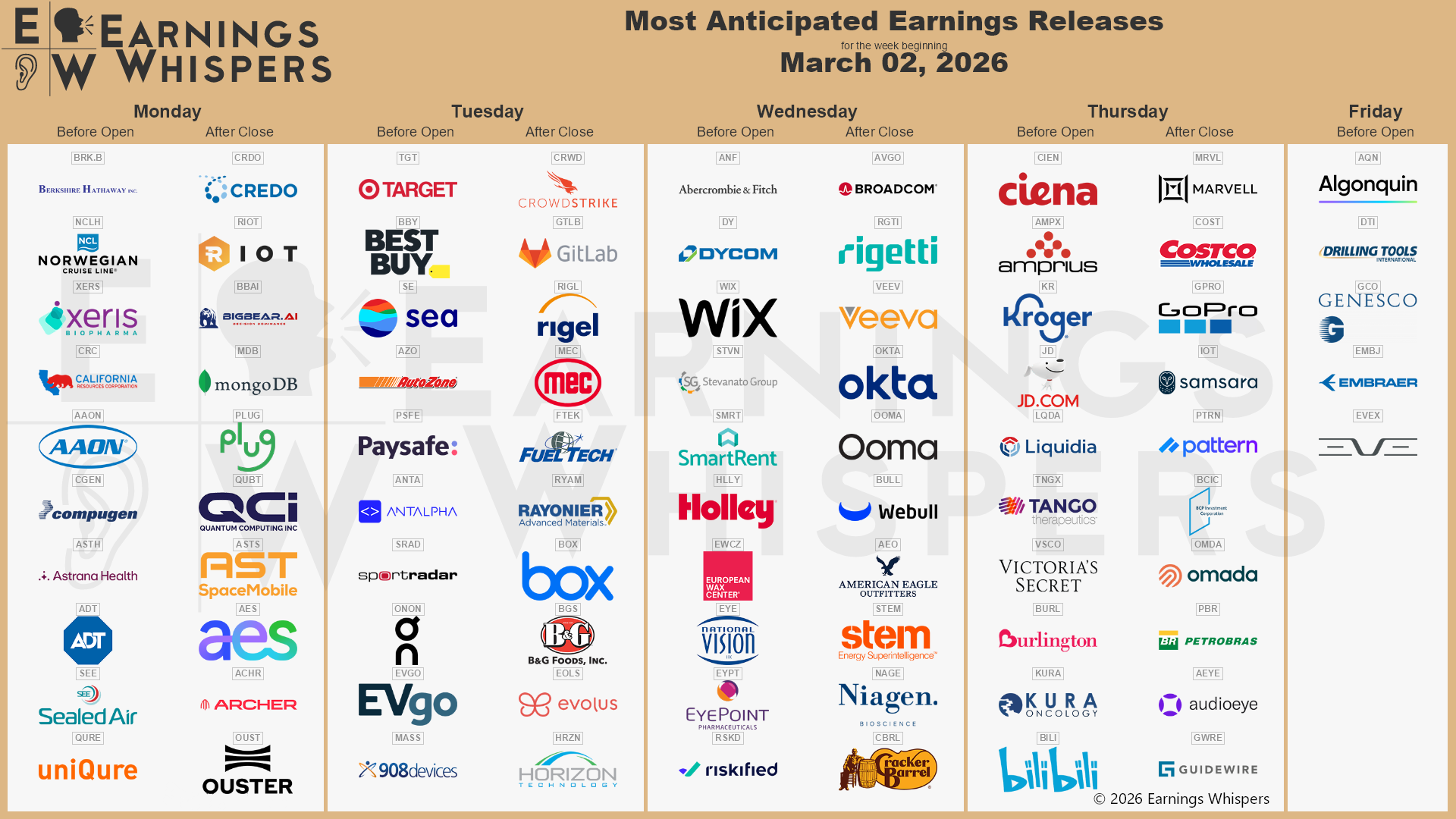
Stock Market Calendar This Week:
| Time (ET) | Report |
| MONDAY, MARCH 2 | |
| 9:45 AM | S&P final U.S. manufacturing PMI |
| 10:00 AM | ISM manufacturing |
| TBA | Auto sales |
| TUESDAY, MARCH 3 | |
| 9:55 AM | New York Fed President John Williams remarks |
| 10:10 AM | Kansas City Fed President Jeff Schmid speaks |
| 11:55 AM | Minneapolis Fed President Neel Kashkari interview |
| WEDNESDAY, MARCH 4 | |
| 8:15 AM | ADP employment |
| 9:45 AM | S&P final U.S. services PMI |
| 10:00 AM | ISM services |
| 2:00 PM | Fed Beige Book |
| THURSDAY, MARCH 5 | |
| 8:30 AM | Initial jobless claims |
| 8:30 AM | U.S. productivity |
| 8:30 AM | Import price index |
| 8:30 AM | Import price index minus fuel |
| 1:15 PM | Fed Vice Chair for Supervision Michelle Bowman |
| speaks | |
| 7:00 PM | Chicago Fed President Austan Goolsbee speaks |
| FRIDAY, MARCH 6 | |
| 8:30 AM | U.S. employment report |
| 8:30 AM | U.S. unemployment rate |
| 8:30 AM | U.S. hourly wages |
| 8:30 AM | Hourly wages year over year |
| 10:15 AM | San Francisco Fed President Mary Daly speaks |
| 1:30 PM | Cleveland Fed President Beth Hammack speaks |
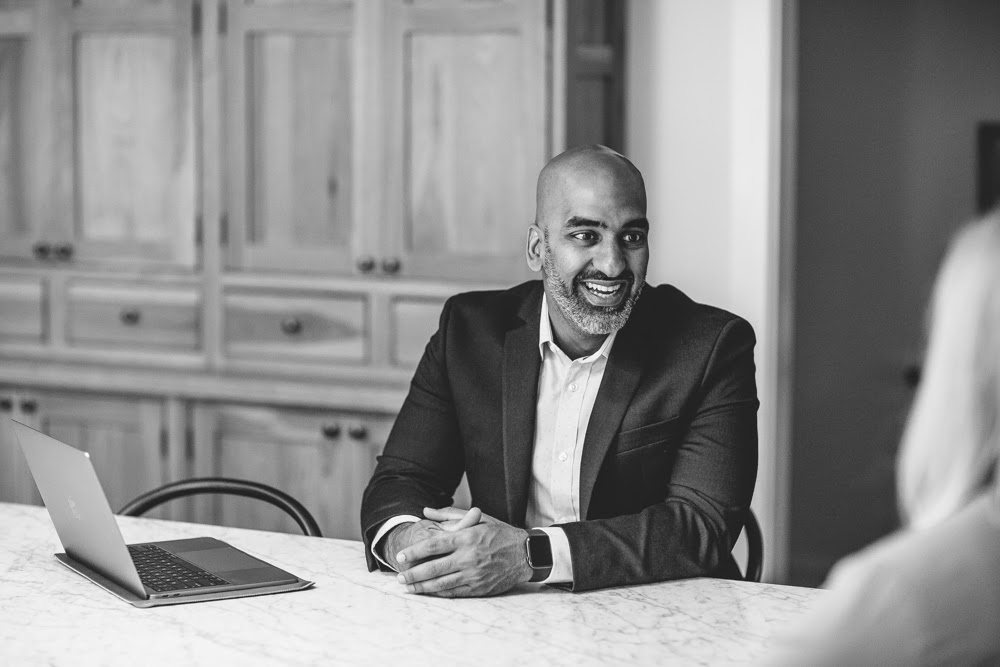
About Amit: I am a first generation American, the son of a working-class Indian family, and I lived through my parents’ struggle to find their place in this country, to put down roots that would sustain them as well as their children in a new land. As they encouraged me to excel in school and fostered my hobbies and interests, I was keenly aware of the dynamic between them. I understood that there was a difference between where they came from individually and where we were now. They worked hard in their individual capacities, but they weren’t always on the same page about financial issues – and that can make or break a family’s future. I didn’t know it at the time, but this laid the groundwork for my passion towards financial services and helping families succeed.