

9 Important 401k Facts Everyone Should Understand
Most people treat their 401k like a box they throw money into and ignore for 30 years.
Money goes in. A statement shows up once in a while. And the assumption is retirement will somehow take care of itself.
That approach works just well enough to hide how much opportunity gets missed.
The truth is simple. A 401k is one of the most powerful wealth-building tools most people will ever have access to. But only if you understand how, it actually works.
I recently saw a graphic outlining several basic 401k rules. It was a good reminder that many of these ideas are not widely understood. So, let’s walk through the important ones in plain English.
What a 401k Actually Is
A 401k is a retirement account sponsored by your employer. You contribute a portion of your paycheck, and the money gets invested for long term growth.
In many cases your employer contributes money as well. That match is one of the few places in finance where free money still exists.
The goal is simple. You build a pool of invested assets during your working years so future you has income when the paychecks stop.
Traditional vs Roth 401k
There are two main versions.
Traditional contributions reduce your taxable income today. If you earn $100,000 and contribute $20,000, the IRS treats you as if you earned $80,000 for tax purposes. The tradeoff is that the money is taxed when you withdraw it in retirement.
Roth contributions work in the opposite direction. You pay taxes today, but the growth and withdrawals later are tax free.
Neither choice is automatically better. The decision usually comes down to whether your tax rate today is higher or lower than it will be later in life.
A 401k Is a Defined Contribution Plan
A 401k is called a defined contribution plan. That language matters.
Older pension systems promised a defined benefit. The employer carried the responsibility for funding retirement.
Today the responsibility sits mostly on the employee. Your retirement outcome depends on how much you save and how well the investments perform over time.
In other words, the system rewards people who participate consistently and understand the rules.
The Power of the Employer Match
Many companies match a portion of employee contributions.
A common structure looks like this. The employer matches 50 percent of the first 6 percent of salary you contribute.
If you earn $100,000 and contribute $6,000, the company adds $3,000.
That is a 50 percent return before the investments even have a chance to grow.
Yet many people still contribute less than the match threshold. That is essentially declining part of your compensation.
Contribution Limits
Each year the IRS sets limits on how much you can contribute.
For most workers under 50, the employee contribution limit is lower than if you are older than 50.
There is also a combined employee and employer contribution limit that is much higher.
The key point is this. Most households are not close to the maximum. Even small increases in savings rates can dramatically change long-term outcomes.
Vesting Periods
Not all employer contributions belong to you immediately.
Many plans use a vesting schedule that requires a certain number of years of employment before the employer match becomes fully yours.
Your own contributions always belong to you.
Employer contributions may require patience. Leaving a job too early could mean forfeiting part of that match.
You Must Actually Invest the Money
This mistake happens more often than people realize.
Someone contributes to their 401k but leaves the money sitting in cash or a stable value fund for years.
Saving money is good. Investing money is what builds wealth.
Many plans automatically place participants in target date funds. These can be a reasonable starting point because they diversify across stocks and bonds and gradually become more conservative as retirement approaches.
The key is making sure the money is actually invested.
What Happens When You Leave a Job
Changing jobs creates another decision point.
Most people have three options.
You can roll the money into an IRA. This often provides more investment flexibility and consolidates accounts in one place.
You can leave the money in the existing 401k if the plan is well managed.
Or you can move it into your new employer’s plan.
The key is avoiding the fourth option that some people accidentally choose. Cashing it out.
Early withdrawals often trigger taxes and penalties that can erase years of growth.
The Temptation of 401k Loans
Some plans allow loans against your balance.
This can sound appealing because you are technically paying yourself back with interest. But the hidden cost is that the borrowed money is no longer invested in the market.
That interruption in compounding can quietly reduce long term growth.
Loans can also become complicated if you leave your employer while one is outstanding.
For most people, loans should be the last option, not the first.
The Bigger Picture
A 401k is not just a retirement account. It is a behavioral tool.
Automatic payroll contributions create forced savings. Employer matches create instant returns. Tax advantages allow investments to compound more efficiently.
When those pieces work together for decades, the results can be powerful.
But the system assumes you understand the basics.
Saving consistently. Capturing the full employer match. Investing appropriately. Avoiding unnecessary withdrawals.
None of this is complicated. But together these decisions can shape whether retirement feels stressful or secure.
That is why we spend so much time helping clients understand how these plans actually work.
The rules are simple once you understand them. The long term impact can be enormous.
Sources
Internal Revenue Service. 401(k) Plan Overview.
https://www.irs.gov/retirement-plans/plan-sponsor/401k-plan-overview
Internal Revenue Service. Retirement Topics – 401(k) and Profit-Sharing Plan Contribution Limits.
https://www.irs.gov/retirement-plans/plan-participant-employee/retirement-topics-401k-and-profit-sharing-plan-contribution-limits
U.S. Department of Labor. 401(k) Plans.
https://www.dol.gov/general/topic/retirement/401k
Charles Schwab. How Does a 401(k) Match Work?
https://www.schwab.com/learn/story/401k-match
Fidelity Investments. Understanding the Average 401(k) Match.
https://www.fidelity.com/learning-center/smart-money/average-401k-match
Empower. How Does 401(k) Matching Work?
https://www.empower.com/the-currency/work/how-does-401k-matching-work
SmartAsset. Does Employer Match Count Toward the 401(k) Limit?
https://smartasset.com/retirement/does-employer-match-count-toward-the-401k-limit
Human Interest. Understanding the 401(k) Employer Match.
https://humaninterest.com/learn/articles/looking-in-depth-at-the-401k-employer-match
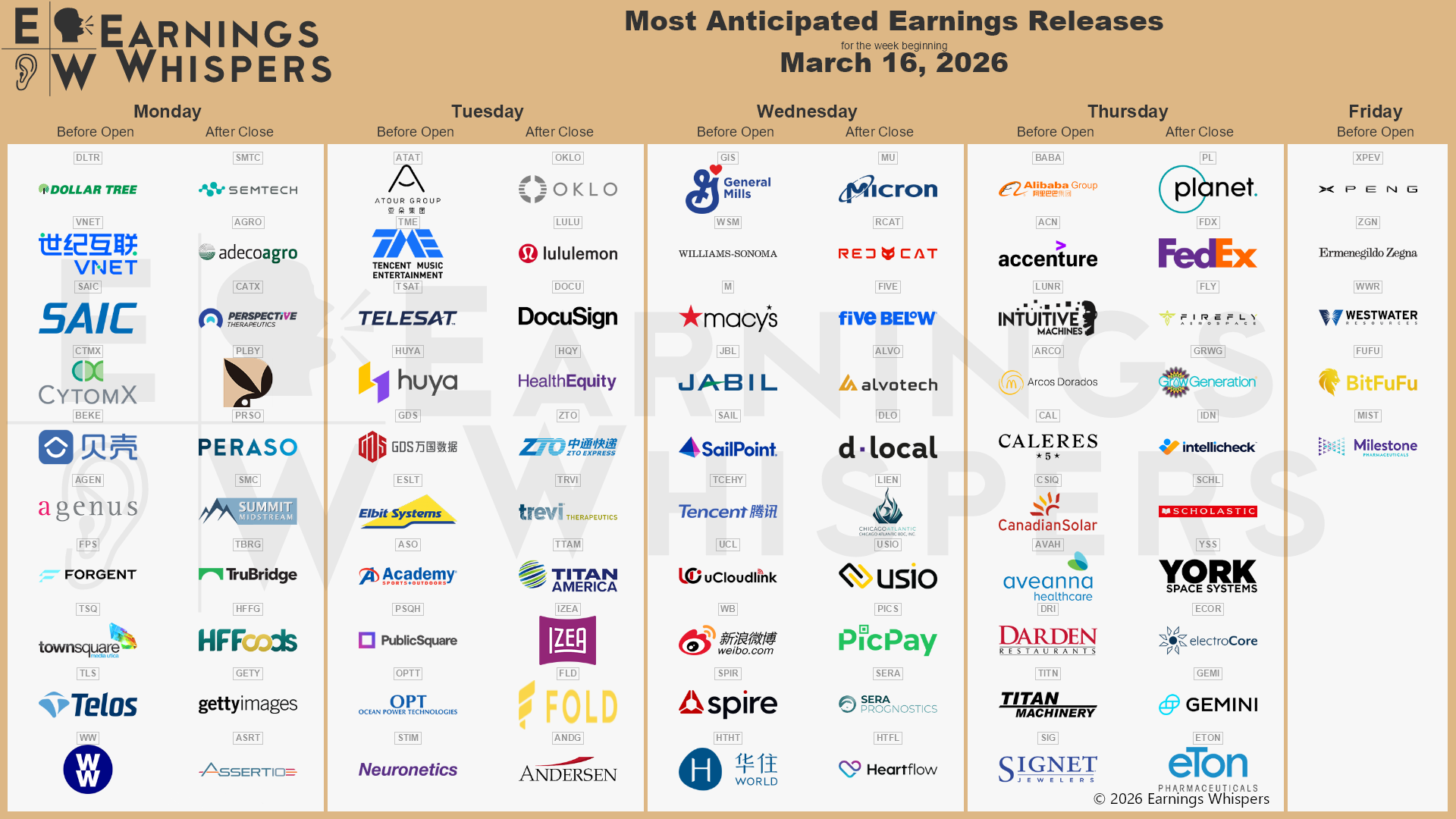
Stock Market Calendar This Week:
| Time (ET) | Report |
| MONDAY, MARCH 16 | |
| 8:30 AM | Empire State manufacturing survey |
| 9:15 AM | Industrial production |
| 9:15 AM | Capacity utilization |
| 10:00 AM | Home builder confidence index |
| TUESDAY, MARCH 17 | |
| 10:00 AM | Pending home sales |
| WEDNESDAY, MARCH 18 | |
| 8:30 AM | Producer price index |
| 8:30 AM | Core PPI |
| 8:30 AM | PPI year over year |
| 8:30 AM | Core PPI year over year |
| 10:00 AM | Factory orders |
| 2:00 PM | FOMC interest-rate decision |
| 2:30 PM | Fed Chair Powell press conference |
| THURSDAY, MARCH 19 | |
| 8:30 AM | Initial jobless claims |
| 8:30 AM | Philadelphia Fed manufacturing survey |
| 10:00 AM | Wholesale inventories |
| 10:00 AM | New home sales |
| FRIDAY, MARCH 20 | |
| None scheduled | |
| SATURDAY, MARCH 21 | |
| 1:30 PM | Fed Chair Powell speech |

About Amit: I am a first generation American, the son of a working-class Indian family, and I lived through my parents’ struggle to find their place in this country, to put down roots that would sustain them as well as their children in a new land. As they encouraged me to excel in school and fostered my hobbies and interests, I was keenly aware of the dynamic between them. I understood that there was a difference between where they came from individually and where we were now. They worked hard in their individual capacities, but they weren’t always on the same page about financial issues – and that can make or break a family’s future. I didn’t know it at the time, but this laid the groundwork for my passion towards financial services and helping families succeed.