

How Investment Advisors Are Structured
Most people don’t think about how financial advisors are actually set up. They shouldn’t need to. But the structure behind an advisor tells you a lot about how they’re paid, who they answer to, and what their incentives look like.
It starts with understanding the two big regulatory worlds in financial services.
Broker-Dealer vs. Registered Investment Advisor
An advisor working for a broker-dealer can earn commissions when you buy products. Their legal obligation is the suitability standard, which means the investment simply needs to be appropriate. Not the best, not the cheapest—just appropriate. FINRA oversees this part of the industry. Firms like Morgan Stanley, Merrill Lynch, and Wells Fargo are included under this category.
A Registered Investment Advisor (RIA) operates under the fiduciary standard, which is a higher bar. An RIA must prioritize your interests at all times. They are paid directly by the client, usually through a fee based on assets or a flat fee for planning services. They do not receive commissions. The SEC regulates RIAs.
Both models are legal. Both exist for a reason. But they’re very different experiences for a client.
The Four Ways Advisors Work
Advisors fit into one of four major structures. Each comes with trade-offs in terms of freedom, incentives, and the client experience.
1. The Traditional Wirehouse Advisor
This is the advisor most people know. They work for a large national firm. Morgan Stanley. Merrill Lynch. UBS. Wells Fargo.
They’re employees. They use the firm’s platform, the firm’s technology, and the firm’s research. The firm sets their pay and their rules.
Many advisors here are excellent. But it’s a sales culture. Compensation is tied to production. Investment choices are limited to what the firm approves. The advisor serves the client, but the advisor also serves the company.
2. Independent Advisors Using an Independent Broker-Dealer
Think LPL Financial, Raymond James Independent, or Commonwealth.
These advisors run independent practices but still operate under a broker-dealer. They have more investment freedom. They can brand their own business. They control a greater share of the client experience.
But they’re still under the broker-dealer model. That means commissions often remain in the picture. Suitability still governs much of the relationship. The firm provides technology, compliance, and product access.
It’s more flexible than a wirehouse, but the incentives remain mixed.
3. Independent Advisors Who Own Their Firm and Affiliate with a Larger RIA
This is the fast-growing middle path.
An advisor builds and owns their own firm. They are independent. They operate under the fiduciary standard. They’re fee-only. No commissions.
Then they partner with a scaled RIA for compliance, trading, billing, technology, and operational support. This gives the advisor independence and ownership without sacrificing infrastructure.
Examples include NewEdge Advisors.
This creates a balanced structure. Clients get the alignment of a fiduciary, the personal touch of a boutique firm, and the institutional support of a much larger organization behind the scenes.
This is the model my firm uses. I control planning, investments, service, and every decision that affects clients. NewEdge handles compliance, trading, billing, and technology. It’s independence with scale.
4. Advisors Who Build Their Own RIA From Scratch
This is full independence.
You create your own RIA. You handle your own compliance. You manage your own trading. You assemble and maintain your own tech stack. You negotiate directly with custodians.
Some firms thrive here. But it’s a massive amount of operational work. It often pulls advisors away from serving clients. And without scale, costs can get heavy.
It’s freedom with no safety net.
Why the Structure Matters
A client should know what motivates their advisor. Fees create one set of incentives. Commissions create another. Ownership creates one mindset. An employer creates another.
The structure tells you who the advisor answers to.
Wirehouses answer to shareholders.
Broker-dealers answer to product and compliance demands.
Independent RIAs answer to themselves.
An independent firm backed by a scaled RIA answers only to the client while still benefiting from operational strength.
Why the Hybrid-Independent RIA Model Makes Sense
Full independence sounds great until you’re dealing with audits, billing, cybersecurity, and compliance filings while trying to give clients the attention they deserve.
Large wirehouses have scale but come with conflicts.
Independent BDs offer flexibility but still tie advisors to commissions and product platforms.
Small solo RIAs have purity but not always capacity or efficiency.
The hybrid model blends independence with scale.
I own my firm. I decide how clients are served. I’m responsible for every recommendation. And I still get institutional-level support from NewEdge Advisors for compliance, trading, billing, technology, and reporting. Clients get a boutique experience with the stability of a large enterprise behind it.
Why This All Matters for Consumers
Hiring a financial advisor is a major decision. People put their savings, their goals, and their sense of security in someone else’s hands. They deserve clarity.
The industry doesn’t make it easy. Titles sound similar. Compensation models are buried in disclosures. Standards of care blend together in marketing. Most people have no idea who is actually required to put their interests first.
This is why understanding advisor structures matters. It cuts through the noise. It lets consumers see the incentives. It helps them judge whether someone is aligned with them or with a company’s sales grid.
Clear education gives people power. When you understand how advisors are built and compensated, you make better decisions about who you trust with your money and your future.
Sources
- U.S. Securities and Exchange Commission. “Investor Bulletin: Working with Investment Advisers.” https://www.sec.gov
- U.S. Securities and Exchange Commission. “Investment Advisers: What You Need to Know.” https://www.sec.gov
- Financial Industry Regulatory Authority (FINRA). “Understanding Broker-Dealers.” https://www.finra.org
- FINRA. “Suitability: What You Need to Know.” https://www.finra.org
- Certified Financial Planner Board of Standards. “Fiduciary Duty FAQ.” https://www.cfp.net
- Investment Adviser Association. “Evolution of the RIA Industry.” https://www.investmentadviser.org
- Cerulli Associates. “U.S. Advisor Metrics Reports” (industry data on advisor models and trends). https://www.cerulli.com
- Michael Kitces, Nerd’s Eye View. “Breakdown of Advisor Business Models.” https://www.kitces.com
- NewEdge Advisors. “RIA Support and Advisor Independence Overview.” https://www.newedgeadvisors.com
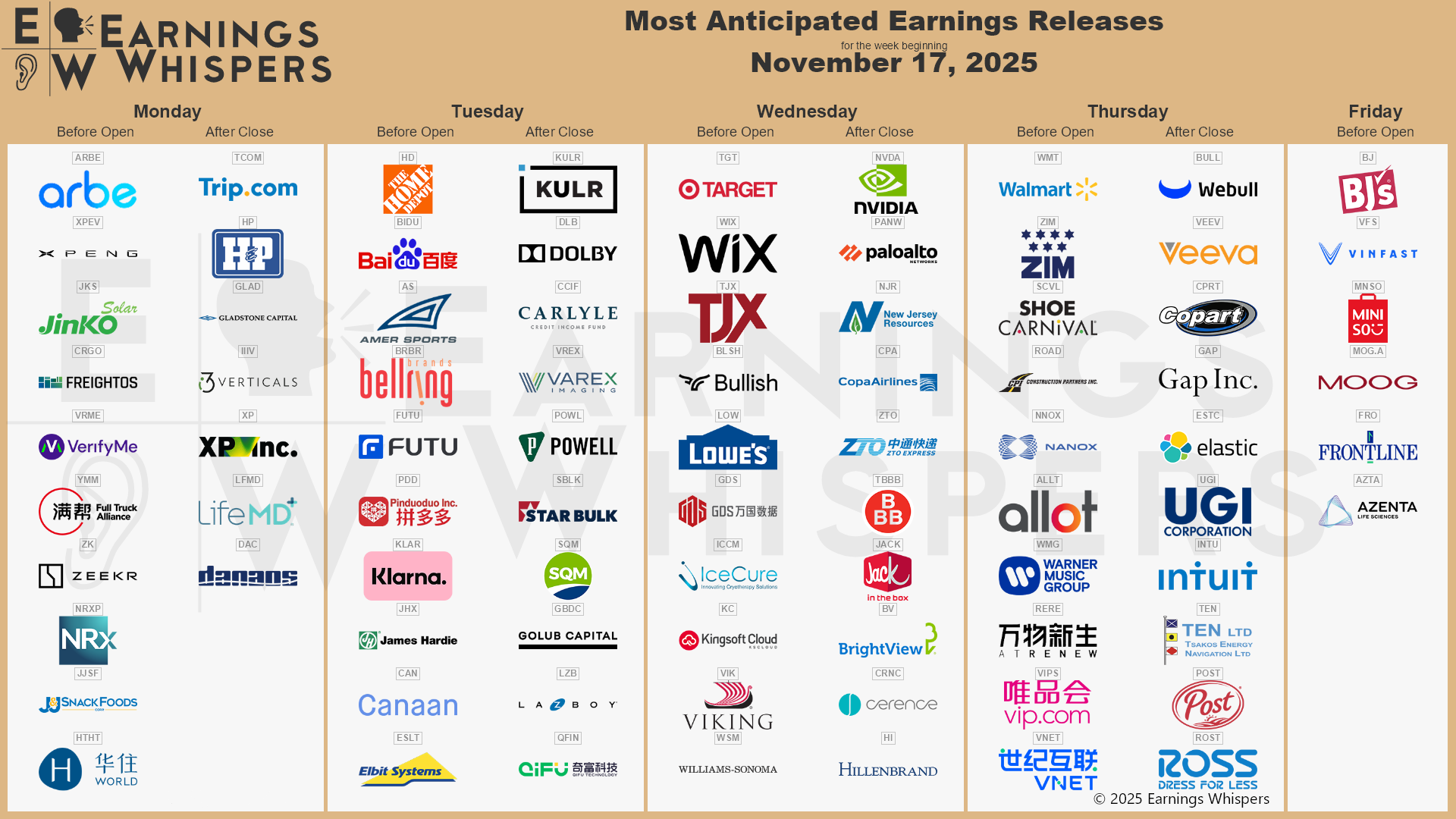
Stock Market Calendar This Week:
| Time (ET) | Report |
| MONDAY, NOV. 17 | |
| 8:30 AM | Empire State manufacturing survey |
| 9:00 AM | Federal Reserve Vice Chair Philip Jefferson speaks |
| 10:00 AM | Construction spending (delayed report) |
| 1:00 PM | Minneapolis Fed President Neel Kashkari speaks |
| 3:35 PM | Federal Reserve governor Christopher Waller speaks |
| TUESDAY, NOV. 18 | |
| 8:30 AM | *Import price index |
| 8:30 AM | *Import price index minus fuel |
| 9:15 AM | *Industrial production |
| 9:15 AM | *Capacity utilization |
| 10:00 AM | Factory orders [delayed report] |
| 10:00 AM | Home builder confidence index |
| 10:30 AM | Federal Reserve governor Michael Barr speaks |
| WEDNESDAY, NOV. 19 | |
| 8:30 AM | Philadelphia Fed manufacturing survey |
| 8:30 AM | Housing starts |
| 8:30 AM | Building permits |
| 8:30 AM | U.S. trade deficit [delayed report] |
| 2:00 PM | Minutes of Fed’s October FOMC meeting |
| THURSDAY, NOV 20 | |
| 8:30 AM | U.S. employment report [delayed report] |
| 8:30 AM | U.S. unemployment rate [delayed report] |
| 8:30 AM | U.S. hourly wages |
| 8:30 AM | Hourly wages year over year |
| 8:30 AM | Initial jobless claims |
| 10:00 AM | Existing home sales |
| 10:00 AM | *U.S. leading economic indicators |
| 11:00 AM | Federal Reserve governor Lisa Cook speaks |
| 1:40 PM | Chicago Fed President Austan Goolsbee speaks |
| 6:45 PM | Philadelphia Fed President Anna Paulson speaks |
| FRIDAY, NOV. 21 | |
| 8:30 AM | Federal Reserve governor Michael Barr welcoming remarks |
| 8:45 AM | Federal Reserve Vice Chair Philip Jefferson speaks |
| 9:00 AM | Dallas Fed President Lorie Logan speaks |
| 9:45 AM | S&P flash U.S. services PMI |
| 9:45 AM | S&P flash U.S. manufacturing PMI |
| 10:00 AM | Consumer sentiment (final) |
Did you miss our last blog?
When Everything Costs Too Much
About Amit: I am a first generation American, the son of a working-class Indian family, and I lived through my parents’ struggle to find their place in this country, to put down roots that would sustain them as well as their children in a new land. As they encouraged me to excel in school and fostered my hobbies and interests, I was keenly aware of the dynamic between them. I understood that there was a difference between where they came from individually and where we were now. They worked hard in their individual capacities, but they weren’t always on the same page about financial issues – and that can make or break a family’s future. I didn’t know it at the time, but this laid the groundwork for my passion towards financial services and helping families succeed.